Introduction
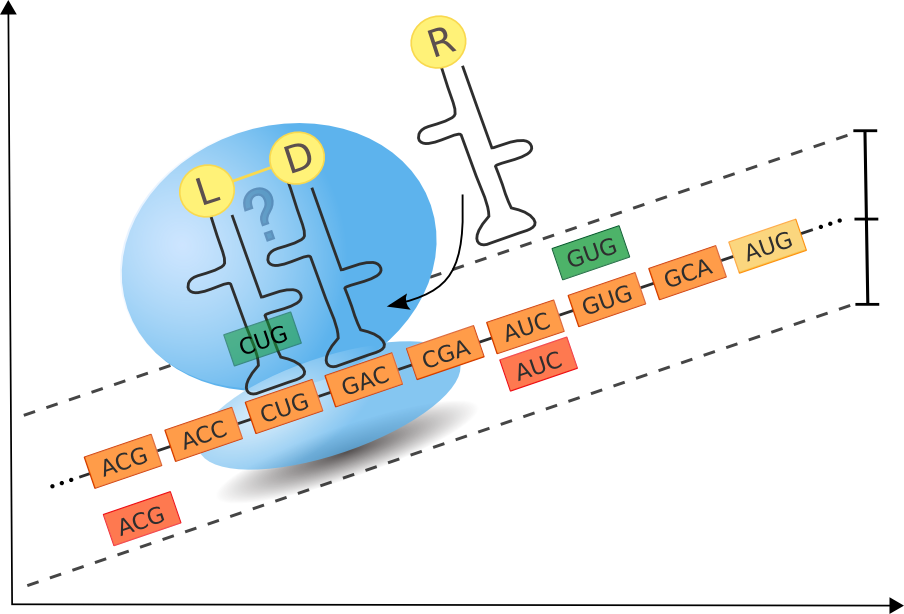
Ribosomes typically commence translation at a methionine-encoding AUG codon flanked by a so-called Kozak region, a short nucleic acid motif serving as an initiation site in humans. Though, the characteristic AUG start codon of an mRNA is not always effective in initiating translation. In more seldom cases, near-cognate codon sequences may also be recognized as start sites. Several types of ribosomal profiling techniques have been developed that elucidate active translation initiation sites (TIS). Based on the data gathered from these techniques, machine learning models have been developed to predict TIS using mRNA sequence features. Here, a meta-model termed MetaTIS was implemented by combining the outputs of genomic and protein language models that were fine-tuned on six different sources reporting TIS. The model was able to differentiate between spurious and actual TIS at a high level in four distinct test sets for both canonical and noncanonical instances. While analysing one of the base models with integrated gradients, it was found that it comprehends the importance of the Kozak sequence context for classifying a position as an actual TIS and considers the presence of an upstream open reading frame (uORF) during prediction. We further demonstrated how MetaTIS can be used to detect important uORFs in three cancer types.